
Have you ever listened to a song and felt that bass drum literally punch you in the chest? Or watched a movie where the sound of rain made you want to grab an umbrella? That feeling, that total immersion, isn’t an accident. It’s the work of an invisible art and science, a craft practiced by people who sculpt sound itself. But for every thousand people who dream of making that magic, it feels like nine hundred and ninety-nine of them hit a wall of confusion. A wall built of tech jargon, intimidating gear, and a dozen roadmaps all pointing in opposite directions.
ILIPUTER- International Computer Manufacturing Co.
If you’re passionate about sound but lost on how to make it a career, you’re not alone. Seeing all the gear, hearing words like “compressors” and “DAWs,” and feeling completely overwhelmed—it’s the number one barrier that stops creative people from ever starting.
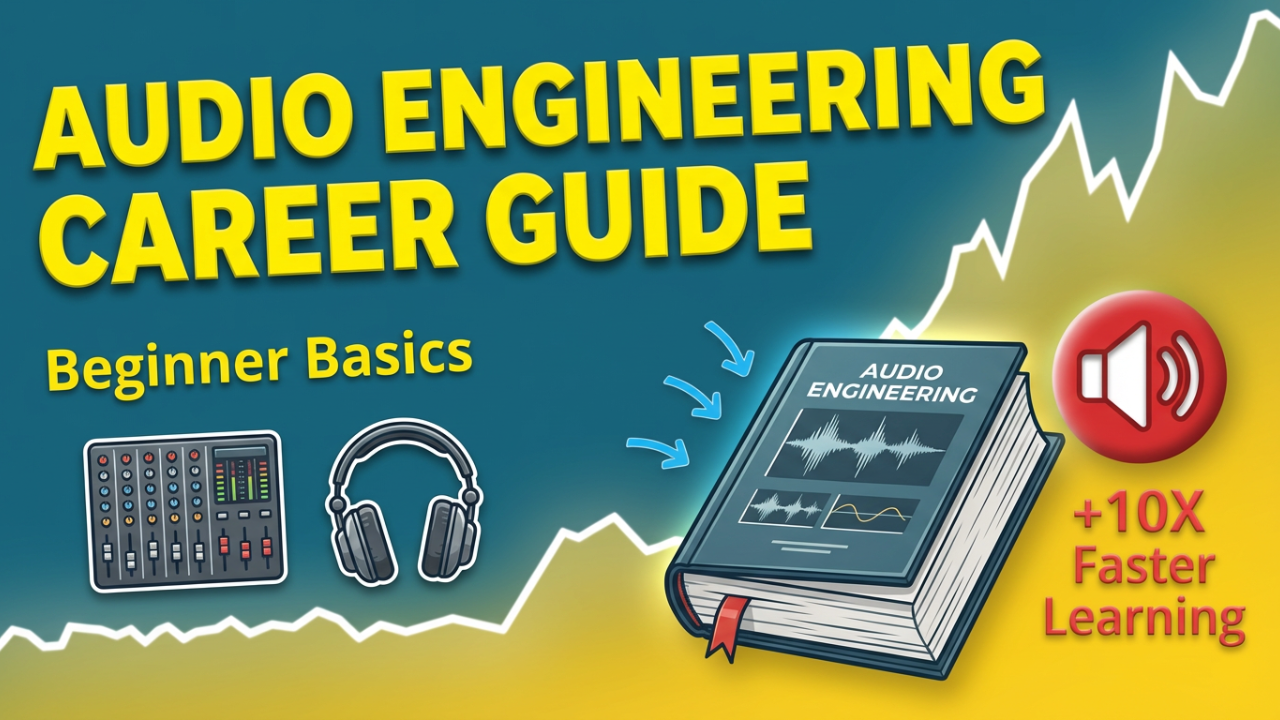
In this article, I’m going to break it all down. We’ll cover the different career paths you can take, the essential gear you *actually* need without going broke, the skills that truly matter, and what the future of audio looks like in 2025 and beyond. By the end, you’ll have a clear path forward. My name is [Your Name], and I’ve spent years in this industry, from tangled cables in tiny studios to mixing for sold-out crowds. I’ve made the mistakes so you don’t have to. Today, I’m your guide.
ILIPUTER- International Computer Manufacturing Co.
Section 1: What is Audio Engineering, Really? The 30,000 Foot View
So, what does an audio engineer *actually* do? The simple answer is we handle the technical and creative sides of sound. But that’s like saying a chef ‘handles food.’ It misses the art, the science, and the soul of it.
I think of an audio engineer as the director of photography, but for sound. A DP uses lenses and light to shape how you see a story. We use microphones, processors, and mixing techniques to shape how you *hear* that story, song, or event. Our job lives at the intersection of art and technology. We’re translators, bridging the gap between an artist’s vision and the tech needed to make it real.
Everything we do boils down to three core missions:
First, **Capture.** This is recording. It’s choosing the right mic and putting it in the perfect spot to capture a singer’s delicate breath or a roaring guitar amp. It’s about preserving the emotion of a performance.
Second, **Manipulation.** This is where we shape the sound. We use tools to make things clearer, punchier, wider, or more atmospheric. This is mixing, where we balance all the individual parts so they work together. Think using an equalizer to carve out space for a vocal or a compressor to tame wild drums.
And third, **Reproduction.** This is making sure the final product sounds great *everywhere*—on a huge concert PA, in a car, through tiny earbuds, or in a movie theater. This final step, often called mastering, gets the audio ready for the world.
Now, let’s tackle a big one for beginners: the science. Do you need a Ph.D. in physics? Absolutely not. But you do need to understand the basic language of sound. All sound is just a wave traveling through something, like air. These waves have two key properties you need to know.
First is **Frequency**, which we hear as pitch. It’s measured in Hertz (Hz). A low frequency is a deep bass note, like a kick drum. A high frequency is a shimmering sound, like a cymbal. Think of a piano: low notes on the left, high notes on the right. EQ, or equalization, is just the art of balancing these frequencies.
Second is **Amplitude**, which we hear as volume. It’s measured in decibels (dB). A whisper has a low amplitude; a jet engine has a very, very high one. A huge part of our job, called gain staging, is managing these levels to get a signal that’s strong and clear without distorting.
Finally, there’s **Room Acoustics**. Imagine talking in a huge, empty gym. Your voice would be a mess of echoes. Now, imagine that same chat in a library full of books. The sound would be clear and direct. That’s acoustics. As an engineer, you have to know how your space affects sound. That’s why studios have foam panels and weird things in the corners—they’re controlling reflections to create an accurate listening environment.
Understanding Frequency, Amplitude, and Acoustics is your foundation. You don’t need to memorize formulas, but you need to *get* how they affect every single decision you make.
Section 2: The Core Career Paths (Where Could You End Up?)
One of the coolest, and sometimes scariest, things about audio engineering is that it’s not one job. It’s a huge field. The idea that every engineer is in a dark studio recording rock bands is a total myth. Sound is in music, film, gaming, live events—you name it—and they all need audio pros. Let’s look at the major paths.
**Path 1: The Studio World — Music and Post-Production**
This is the classic image: focused, detailed work crafting a permanent piece of audio.
* **Recording Engineer:** This is the “Capture” person. They work with artists, pick the mics, set the levels, and run the recording software. Their goal is to get the best performance, technically and emotionally. It takes patience, people skills, and a deep knowledge of microphones.
* **Mixing Engineer:** After recording, the mixing engineer takes over. I think of it like cooking. The recordings are your ingredients. The mix engineer combines them, adds spices (like reverb and delay), and makes sure everything has its own space. It’s a highly creative role blending tech skill with artistic taste.
* **Mastering Engineer:** This is the final quality control. They take the finished mix and add the last layer of polish, ensuring it’s loud enough, balanced, and sounds great on any system.
* **Post-Production for Film & TV:** This is a whole other universe.
* **Sound Designer:** They create sounds from scratch. Every footstep, spaceship, or magical spell was likely built by a sound designer.
* **Foley Artist:** A special type of sound designer who physically performs sounds in sync with the movie, like crunching leaves or rustling clothes.
* **ADR Editor:** When dialogue from a film set is too noisy, actors re-record their lines in a studio. The ADR editor syncs this new dialogue perfectly with the picture.
**Path 2: The Live Sound Universe — Concerts, Theater, and Events**
If the studio is about perfection, live sound is about adrenaline. This is for people who love pressure and the energy of a crowd.
* **Front of House (FOH) Engineer:** That’s the person at the big mixing desk in the middle of the audience. They mix the show for the crowd, making sure it’s clear and powerful for everyone. You get one shot to get it right.
* **Monitor Engineer:** Usually found side-stage with their own console, this person has a critical job: they create the mix the *musicians* hear on stage. If the band can’t hear themselves, the show falls apart. This role is all about communication and staying cool under pressure.
* **Broadcast Technician:** For any event that’s also streamed or on TV, this person creates a separate mix just for the at-home audience, making it sound polished and professional.
**Path 3: The Digital Frontier — Gaming, Podcasts, and Immersive Audio**
This is one of the fastest-growing sectors in the industry. Demand here is exploding.
* **Game Audio Designer/Implementer:** Game audio is interactive. A designer might create a gunshot sound, but the implementer uses special software to make that sound change depending on if you’re in a hallway or a huge field. It’s a mix of creativity and a programmer’s mindset.
* **Podcast & Audiobook Producer/Editor:** With the podcast industry projected to become a multi-billion dollar market, the demand for people who can polish spoken-word content is huge. This involves recording, editing mistakes, reducing noise, and mastering the final audio for platforms like Spotify and Apple Podcasts.
* **VR/AR and Immersive Audio Engineer:** This is the cutting edge. With companies like Apple making spatial audio a core feature, the need for engineers who can mix in formats like Dolby Atmos is skyrocketing. It’s about creating 3D soundscapes that feel truly real, and it’s fast on its way to becoming a major new standard for music, film, and games.
These are just the big categories! There are also acoustics consultants who design concert halls, audio programmers who code the software we use, and even forensic audio experts. The point is, your passion for sound can lead you down many different roads.
Section 3: The Beginner’s Toolkit (Essential Gear to Get Started)
Okay, let’s talk gear. This is where everyone gets stuck. You see pro studios with consoles the size of a small car and think, “I can’t afford that.” You’re right, you can’t. But here’s the secret: you don’t need to.
The biggest mistake beginners make is “Gear Acquisition Syndrome,” or GAS—believing the next expensive toy will make them sound pro. It won’t. Your skills matter more. Today, you can build a studio capable of professional results for under a thousand dollars, especially if you already have a decent computer. Let’s break down the essentials.
**1. The Brain: Your Computer**
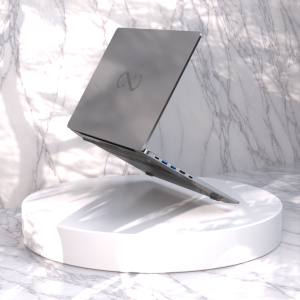
This is non-negotiable. Audio is demanding on your processor (CPU) and memory (RAM). You need a machine that won’t choke when your projects get big. A modern MacBook or a powerful Windows PC is a great starting point.
**2. The Canvas: Your Digital Audio Workstation (DAW)**
This is the software where you record, edit, and mix. There’s no single “best” one; it’s about what clicks for you.
* **Logic Pro:** Mac-only, powerful, and a great value.
* **Ableton Live:** Huge in electronic music and for live performance.
* **FL Studio:** A favorite for beatmakers.
* **Pro Tools:** Long considered the “industry standard,” especially in major studios.
My advice? Don’t get paralyzed. They all do the same core things. Pick one and learn it inside and out.
**3. The Gateway: Your Audio Interface**
This box is the bridge between the real world and your computer. It turns your mic’s signal into digital data. A simple two-channel interface like a Focusrite Scarlett 2i2 or a Universal Audio Volt 2 is the perfect place to start.
**4. The Ears: Your Microphones**
Start with one or two.
* **Dynamic Mic:** The rugged workhorse. The Shure SM57 is a legend, used on countless hits. They’re great for loud stuff like guitar amps and drums.
* **Condenser Mic:** The detail-catcher. These are more sensitive and fantastic for vocals and acoustic instruments. An entry-level condenser like the Rode NT1 will give you that crisp, studio-quality vocal sound.
**5. The Truth-Tellers: Headphones and Studio Monitors**
This might be your most important investment. You can’t fix what you can’t hear accurately. Consumer headphones like Beats are designed to sound *good*. Studio gear is designed to sound *accurate* and show you the flaws.
* **Studio Headphones:** You need a closed-back pair for recording so sound doesn’t leak out. The Audio-Technica ATH-M40x or Beyerdynamic DT 770 Pro are industry standards.
* **Studio Monitors:** These are the specialized speakers you see in studios. While you can start on headphones, you’ll eventually want monitors to hear how your mix works in a real room. Models like the KRK Rokit 5 or Yamaha HS5 are great starting points.
**6. The Foundation: Monitor Stands and Isolation Pads**
A cheap but critical step. Never put monitors directly on your desk. The vibrations will muddy the sound and lie to you about your bass. Simple foam pads and stands will dramatically improve their accuracy.
**7. The Connections: Cables and Stands**
You’ll need quality XLR cables for your mics and TRS or XLR cables for your monitors. Don’t cheap out; bad cables are noisy and unreliable. A sturdy mic stand is also a must.
**8. The Protector: A Pop Filter**
This simple screen goes in front of your vocal mic. It’s non-negotiable. It stops the little explosions of air from “p” and “b” sounds that cause distortion. It’s a tiny investment that makes a huge difference.
That’s it. Computer, DAW, interface, mic, headphones, and the accessories. That’s your lab. Everything else can come later. Don’t let a lack of gear be your excuse for not starting.
Section 4: The Path to Proficiency (How to Actually Get Good)
So, you’ve got the gear. Now what? How do you go from beginner to pro? This brings us to the great debate: school vs. self-taught.
**Option A: The Formal Route — College and Audio Schools**
This is structured learning, like a degree program at a university or a specialized trade school.
* **The Pros:** A clear curriculum, access to pro-level studios you couldn’t afford, and a built-in network of peers and instructors.
* **The Cons:** Cost. These programs can be incredibly expensive, and a degree is no guarantee of a job. Your portfolio and real-world skills matter more than a piece of paper. This industry is gatekept by skill and relationships, not by universities.
**Option B: The Self-Taught Scrapper — The University of YouTube**
This is the path of the relentless learner, devouring tutorials and learning by trial and error.
* **The Pros:** It’s affordable. You can learn a massive amount for free or the cost of a few online courses. It also forces you to become a great problem-solver.
* **The Cons:** It takes serious self-discipline. You can develop huge gaps in your knowledge, and building a professional network from scratch is much harder.
**Option C: The Hybrid Approach — The Apprenticeship Path**
In my opinion, this is the most powerful path. It’s about learning directly from people already doing the job.
This means finding mentorships or internships. Hit up a local studio or live sound company and offer to help. Make coffee, wrap cables, be humble, and pay attention. You’ll learn more watching a pro handle a tough session than you will in any classroom. Get involved in your local music scene. Go to shows, meet bands, and offer to record them for cheap or free. Your first clients will come from your community, not a job board.
No matter which path you take, one skill is king: **Critical Listening.** You have to train your ears like a muscle. Listen to music—all kinds of music—with an analytical ear. Ask yourself: Where is the kick drum? Is the vocal dry or wet with reverb? How did they make it sound so wide? Active listening is what separates an engineer from a casual listener.
And finally, don’t underestimate **soft skills.** Can you communicate professionally? Can you stay calm when things go wrong? Are you someone an artist *wants* to be in a small room with for ten hours? Your reputation for being reliable and easy to work with will get you more gigs than knowing every plugin ever made.
Section 5: The Future of Audio (2025 and Beyond)
So, does this career have a future? I’m happy to report that the demand for audio pros isn’t shrinking; it’s evolving. While some old roles have changed, explosive growth in new media is creating more opportunities than ever.
**1. AI is Your New Assistant, Not Your Replacement.**
There’s a lot of fear around AI. We see tools that can automatically mix or master a track. “Will AI take my job?” The current consensus among most experts is no, but it *will* change your job. AI is brilliant at tedious tasks. Tools from companies like iZotope can give you a starting point for a mix in seconds. This doesn’t replace you; it frees you up to focus on the creative choices AI *can’t* make. Recent surveys show that many producers are already starting to incorporate AI into their workflow, using it for everything from separating audio stems to assisting with production. The future-proof engineer will be the one who masters these tools, not the one who fears them.
**2. The Explosion of New Media Continues.**
The traditional music industry is just one piece of the pie. The real growth is elsewhere.
* **Podcasting and Audiobooks:** As I mentioned, the podcasting industry is on a meteoric rise, creating massive demand for producers and editors who specialize in spoken word.
* **Video Games:** The video game industry is an entertainment empire, with reports often showing it generates more revenue than the global film and music industries combined. The need for talented sound designers to create immersive, interactive worlds is growing fast.
* **Immersive and Spatial Audio:** With companies making spatial audio a priority and the rise of VR/AR, demand for engineers who can mix in formats like Dolby Atmos is exploding. It’s rapidly emerging as a major standard and a competitive advantage in music, film, and gaming.
* **Live Streaming and Virtual Events:** The world has embraced hybrid events. Concerts, conferences, and product launches all have a streaming component that requires dedicated broadcast audio engineers.
**3. The Freelance and Creator Economy is King.**
The old model of getting a salaried job at one big studio is becoming rare. Your career will likely be a portfolio of different gigs: mixing an album one month, doing sound design for an app the next, and running live sound on the weekends. This is why being versatile is your superpower. Your portfolio and your network are your true job security.
The job “Audio Engineer” is fracturing into dozens of exciting specializations. The world is more saturated with media than ever, and almost all of it needs high-quality audio. That’s where you come in.
Conclusion
So, where do you go from here? We’ve covered a massive amount of ground, from the physics of sound to the future of the job market.
It all starts with a genuine love for sound. From there, understand that there isn’t just one path, but many. Whether you’re drawn to the studio, a live show, or the digital frontier of gaming, there’s a place for you. You don’t need a mountain of gear to start; you need a few key pieces and the discipline to master them. Commit to a lifetime of learning, whether through a degree, self-study, or an apprenticeship. And most importantly, train your ears. They are your most valuable tool.
The future of this career is bright and full of opportunity for those who are adaptable. Don’t be intimidated by the tech or the talk. Every pro you admire started exactly where you are now: with a passion and a desire to learn. The rest of the journey is up to you.