
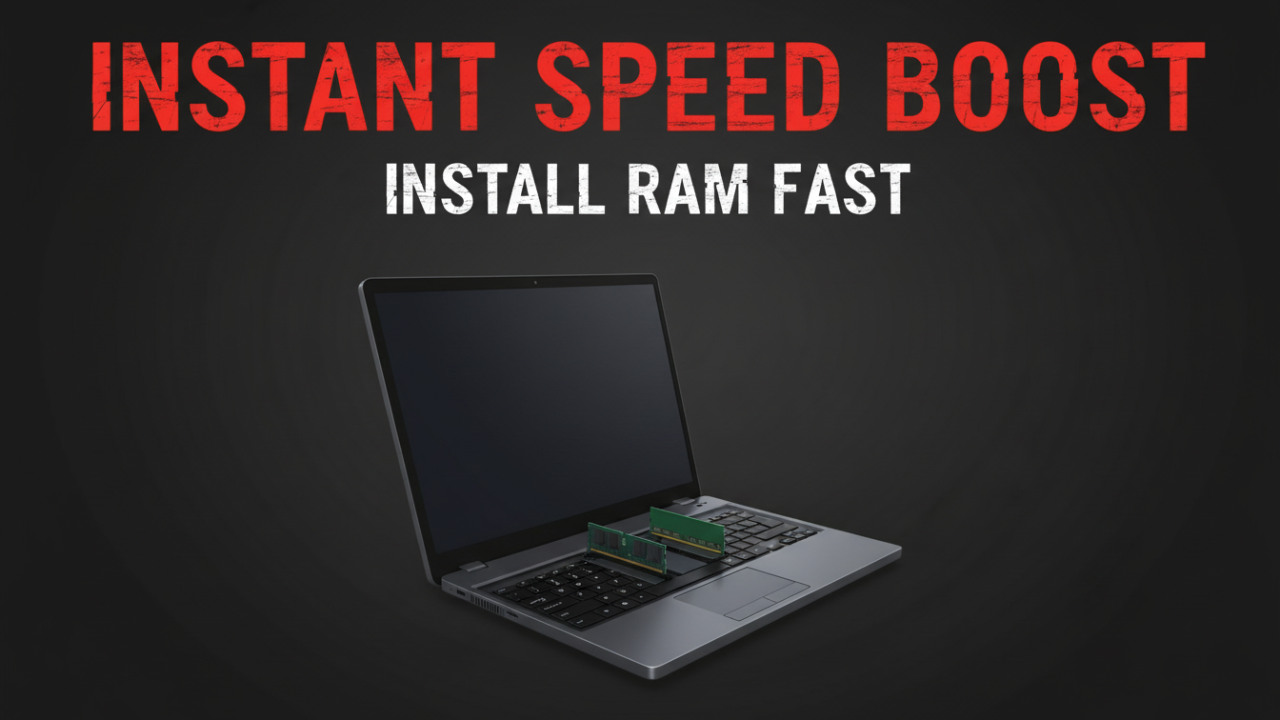
We’ve all been there. This trusty laptop, my digital sidekick for what feels like an eternity, has become… well, painful. It’s at that point where opening a few browser tabs makes it grind to a halt. The mouse stutters, apps take forever to open, and that spinning wheel of death is basically a permanent resident on my desktop. It’s slow, it’s frustrating, and I’m *this* close to doing something drastic.
But before I give up and sentence it to a life of gathering dust, I’m going to try one last thing. It’s a legendary fix, a DIY rite of passage that people swear by. I’m talking about a RAM upgrade. They say it’s simple, affordable, and can instantly bring a machine like this back from the dead. But can it, really? Can a couple of small green circuit boards truly resurrect this dying laptop? There’s only one way to find out. Let’s do this.
ILIPUTER- International Computer Manufacturing Co.
**Section 1: The Problem in Detail – Why Is My Laptop So Slow?**
So, what’s really going on here? Why does a laptop that used to feel brand new eventually slow to a crawl? It’s not your imagination. Most of the time, the culprit is simple: not enough Random Access Memory, or RAM.
Think of RAM as your computer’s digital workbench. When you open anything—a browser, a document, a game—your computer takes the data it needs from storage (your hard drive or SSD) and puts it on this workbench. RAM is incredibly fast, so your computer can access that data almost instantly, letting you work and switch between tasks seamlessly.
The problem starts when the workbench gets too crowded. This laptop came with 8 gigabytes of RAM. A few years ago, that was fine. But things have changed. Operating systems are more demanding, websites are loaded with videos and scripts, and apps are more powerful and memory-hungry. Even just having a chat app running in the background eats up a good chunk of that workbench space.
By late 2025, 16GB of RAM is the new minimum for a smooth experience on a Windows PC, and for anyone who juggles multiple tasks, 32GB is quickly becoming the real standard. When you try to run today’s software on yesterday’s hardware, you run out of workbench space. What does your computer do? It starts to panic.
This is where you see the classic signs of a slow computer. It starts using your main storage drive as an emergency overflow workbench, a process called “paging”. Since even a fast SSD is dramatically slower than actual RAM, your whole system grinds to a halt. That’s the stutter you feel. That’s the lag when you switch between a document and a browser tab. It’s your computer desperately juggling data between its fast workbench and its slow warehouse. You might even see your hard drive light blinking constantly—a tell-tale sign your system is overworked, wearing down your components and your patience.
**Section 2: The Solution – The Legendary RAM Upgrade**
This brings us to the RAM upgrade. It is, without a doubt, one of the most cost-effective, high-impact, and beginner-friendly upgrades you can do. While swapping a processor is like complex surgery, upgrading RAM is more like changing a lightbulb. It’s a simple, plug-and-play solution that directly fixes the problem.
Let’s talk value. A new, decent-quality laptop in late 2025 can easily set you back hundreds, if not thousands, of dollars. And for what? More memory and maybe a slightly faster processor. But what if the only thing truly holding your machine back is that crowded digital workbench?
A RAM upgrade kit—say, going from 8GB to a much more comfortable 16GB or even a powerhouse 32GB—costs a tiny fraction of a new laptop’s price. It’s an investment, often under a hundred dollars, that can make your old machine feel new again. It directly tackles multitasking and app responsiveness, the two things that make a computer *feel* fast in daily use.
And honestly, the best part is the feeling of empowerment. There’s something so satisfying about opening up your own device and making a real improvement. It demystifies the tech we use every day and proves you don’t always need to just buy a new device. It’s a sustainable choice that extends the life of your hardware and reduces e-waste.
So, is it worth it? Can this one simple change make a night-and-day difference? That’s what we’re here to find out. We’re going to give this struggling machine the one thing it’s begging for: more breathing room.

**Section 3: The Crucial First Step – Compatibility Check**
Hold on! Before you get excited and buy the first shiny RAM kit you see, we need to do the single most important step: the compatibility check. Messing this up means you’ll waste money on memory that won’t fit, won’t work, or could even damage your laptop. We need to answer four questions: Can my laptop even be upgraded? What *type* of RAM do I need? *How much* can I install? And what *speed* should I get?
**Part A: The ‘Is It Even Possible?’ Check**
First, a dose of reality. To make laptops thinner, many manufacturers now solder the RAM directly to the motherboard, especially in ultrabooks and all Apple MacBooks with M-series chips. If your RAM is soldered, your upgrade journey ends here. It’s not upgradeable.
How do you find out? The easiest way is a quick internet search. Just search your exact laptop model number followed by “RAM upgrade” or “specs.” The model number is almost always on a sticker on the bottom of your laptop. The search results will quickly tell you if the memory is accessible.
**Part B: The Software-Based Check**
If you’ve confirmed your laptop has upgradeable RAM, let’s see what’s inside. Windows has a great built-in tool for this. Press **Ctrl + Shift + Esc** to open the Task Manager. Click on the “Performance” tab, then select “Memory.”
This screen gives you a ton of info. In the top right, it shows the total RAM installed—for me, 8.0 GB. Right below that, you’ll find the **Speed**. Mine says 3200 MHz. You’ll want to buy new RAM that matches this speed.
Now, look down on the right side. You’ll usually see a line that says **”Slots used.”** This is critical. Mine says “2 of 2,” meaning my laptop has two slots, and both are full. To upgrade, I have to *replace* the existing sticks. If yours says “1 of 2,” you’re in luck! You have an empty slot and might just be able to add another stick.
Finally, you should see a “Form Factor” listed as **SO-DIMM**. This is the physical size for laptop RAM. Desktops use larger DIMM sticks, so you must buy the smaller SO-DIMM type.
**Part C: Understanding the Specs – Decoding the Jargon**
You’ve got the numbers, but what do they mean?
* **Type (DDR):** This stands for “Double Data Rate,” and the number is the generation (DDR3, DDR4, DDR5). These are not interchangeable; a DDR4 laptop cannot use DDR5 RAM. A new standard, LPCAMM2, is emerging on some very high-end mobile workstations, but for now, it’s not something most people will run into.
* **Capacity (GB):** This is the memory size. You need to know your laptop’s maximum supported capacity. Just because you can buy a 32GB stick doesn’t mean your laptop can use it. Again, searching for your model’s specs is the best way to find this. You can also try a Command Prompt trick: type `wmic memphysical get MaxCapacity` and press Enter. Divide that number by 1048576 to get the max capacity in gigabytes. Note that this `wmic` tool is being phased out, but it still works on many systems.
* **Speed (MHz):** This is how fast the memory runs. It’s best to install RAM that matches the speed your system is designed for. Installing faster RAM usually won’t hurt anything, but the system will just slow it down to match what the motherboard supports.
* **Single vs. Dual-Channel:** If you have two RAM slots, always install RAM in a matched pair (a “kit”). This lets the system run in “dual-channel” mode, which basically opens up a second lane for data to travel between the memory and the processor, giving you a nice little speed bump.
**Part D: The Easiest Method**
Feeling overwhelmed? There’s a nearly foolproof way to do this. Companies like Crucial have a “System Scanner” tool. You download and run a small app, and it tells you exactly what you have, what you can upgrade to, and gives you a list of 100% compatible options. It takes all the guesswork out of the process and is what I recommend for anyone who’s even a little unsure.
After my own checks, I know I need to buy a kit of two DDR4 SO-DIMM sticks running at 3200 MHz. I’m going from my current 8GB to a much healthier 32GB by installing two 16GB sticks. That should be more than enough workspace for anything I can throw at it.
**Section 4: Getting Your Tools Ready**
With our new RAM in hand, it’s time to prep for surgery. Luckily, you only need a few basic things.
First, a **screwdriver**. You’ll need a small Phillips-head screwdriver, probably a #0 or #1. My advice? Get an inexpensive precision screwdriver set. These have interchangeable bits, which is a lifesaver because some laptops use different-sized screws or even an occasional Torx screw.
Next, I highly recommend a **plastic prying tool**. You might see people online using a flathead screwdriver or a knife to pop the case open—please, don’t do that. You will almost certainly scratch or gouge the plastic. A plastic tool, often called a “spudger,” or even a guitar pick, is designed to separate plastic clips without causing damage.
The third, and most important tool for safety, is an **anti-static wrist strap**. This is non-negotiable for me. Your body can build up static electricity, and if you touch a sensitive component, that spark—sometimes too small to even feel—can destroy it permanently. It’s called Electrostatic Discharge (ESD), and it’s a silent killer of computer parts. An anti-static strap costs just a few dollars. You wear it on your wrist and clip the other end to a large, unpainted metal object. This safely grounds your body so you can’t build up a charge. It’s the cheapest insurance policy you’ll ever buy.
Finally, prep your **workspace**. You need a clean, flat, well-lit surface like a desk or kitchen table. Avoid working on a carpet at all costs; it’s a static-generating machine. Have a small bowl or magnetic tray to keep all the tiny screws organized. Trust me, there’s nothing worse than having a mystery screw left over.
With our new RAM, screwdrivers, prying tool, and anti-static strap, we’re ready to go.
**Section 5: The Main Event – Step-by-Step Installation**
Alright, this is the moment. Time to open up the patient. If you take your time and follow these steps, I promise this is surprisingly easy.
**Step 1: The Full Shutdown Protocol**
First, make sure the laptop is completely powered off. Don’t just close the lid. Go to the Start Menu, click Power, and select “Shut Down.” Wait for all the lights to go off and the fans to stop spinning. Then, unplug the power adapter from the wall and the laptop.
**Step 2: Battery Disconnection – The Critical Safety Step**
This is the most important safety step. We have to disconnect all power. If you have an external, removable battery, just pop it out. But like most modern laptops, mine has an internal one. That means we have to disconnect it from the motherboard *after* we open the case. Do not skip this. Working inside a laptop with the battery connected is asking for a short circuit.
**Step 3: Grounding Yourself**
Before touching a single screw, put on your anti-static wrist strap. Get the cuff snug on your wrist. For now, clip the other end to a nearby metal object. Once the case is open, we’ll clip it to the metal frame inside. If you refuse to use a strap, at least make a habit of touching a large metal part of the laptop’s chassis every minute or so to discharge any static.
**Step 4: Opening the Case**
Flip the laptop over onto a soft cloth to avoid scratches. Now, systematically remove all the screws on the bottom panel. Some might be hiding under the rubber feet, so gently peel them back if you suspect a screw is there. Keep your screws organized in your tray—maybe even sketch the bottom of the laptop and place them on the drawing so you know exactly where each one goes.
With the screws out, grab your plastic prying tool. Find a seam between the bottom cover and the main body, usually near a hinge. Gently wedge the tool in and give it a little twist. You should hear a small *pop* as the first clip releases. Slowly work your way around the entire edge, sliding the tool and releasing the clips one by one. Be patient. Never force it. The cover should eventually lift right off.
**Step 5: Locating the RAM**
With the cover off, we’re in. Before you touch anything, find a metal surface inside—like the chassis frame—and clip your anti-static strap to it. Now, let’s find the RAM. It’s usually easy to spot: one or two small green circuit boards held by silver clips. On some laptops, it might be under a thin plastic flap or a small metal shield that you’ll have to lift off. Here on my machine, it’s right in the center.
**Step 6: Removing the Old RAM**
Look closely at one of the RAM sticks. You’ll see a small metal retaining clip on each side. To release it, gently push both clips *outward*, away from the RAM. As you do, the stick won’t come straight out; it will pop up on its own to about a 30- or 45-degree angle. That’s how it’s supposed to work. Once it’s popped up, you can grab it by the sides and slide it straight out of the slot. Don’t touch the gold connector pins! I’ll do the same for the second stick: push the clips out, let it pop up, and slide it out.
**Step 7: Handling and Aligning the New RAM**
Time to unbox the new RAM. Remember to handle the modules only by their side edges. Avoid touching the chips on the board, and especially do not touch the gold contact pins. The oils from your fingers can mess with the connection.
Look at the gold pins on the new stick. You’ll see a small notch—a little gap. Now look at the empty slot. You’ll see a little plastic ridge that lines up with that notch. This is a key that ensures you can only insert it one way. If it doesn’t seem to line up, you’ve got it upside down.
**Step 8: Installing the New RAM**
Holding the new stick by its edges, line up the notch with the ridge in the slot. Now, slide the module into the slot at that same 30- to 45-degree angle. Push it in firmly but gently. Make sure it’s fully seated—you shouldn’t see any of the gold pins.
Once it’s all the way in, press down on the top edge of the stick. It will pivot down toward the motherboard. As it gets flat, you should hear a satisfying *click* as the two silver clips snap into place and lock it down. That ‘click’ is the sound of success.
**Step 9: The Second Stick**
Since I’m installing a matched pair, I’m just repeating the exact same process for the second slot. Align the notch, insert it at an angle, and press down firmly until the clips on both sides click into place. And that’s it. The physical installation is done.
**Section 6: Putting It All Back Together**
With the new memory clicked into place, we’re on the home stretch. Time to close up the patient and get ready for the moment of truth. This is just the reverse of taking it apart, but it’s still important to be careful.
The absolute first thing you must do is reconnect the internal battery. Carefully line up the connector and press it firmly into its socket. Do not forget this step.
Next, take the bottom cover. Do a quick visual check to make sure you didn’t leave any tools or loose screws inside. Align the cover over the laptop body. I like to line up the port cutouts on one side first. Once it’s aligned, apply gentle, even pressure around the edges. You’ll hear a series of soft clicks as the plastic clips re-engage.
Now, replace the screws. Start each one by hand to make sure it isn’t cross-threaded, then use your screwdriver to tighten it until it’s just snug. Don’t crank down on them; you can strip the threads or crack the plastic. If you organized your screws, this part is easy. Put the rubber feet back on if you removed any.
Finally, you can plug the AC adapter back in. Give your work one last look. The case should be closed securely with no gaps. All done. The hardware part is officially over.
**Section 7: The Moment of Truth – The First Boot**
Okay, deep breath. This is where we find out if our surgery was a success. It’s time for the first boot with the new memory.
I’m pressing the power button now. Be prepared: this first boot-up might take noticeably longer than usual. Don’t panic. If the screen stays black for 30, 60, or even 90 seconds, just be patient. This is often completely normal. The laptop’s BIOS is detecting a hardware change and is “training” itself on the new memory.
Sometimes, a message might appear before Windows loads, saying something like, “The amount of system memory has changed.” It may ask you to press a key to continue. This is not an error; it’s a confirmation! It’s a great sign that the computer sees the new RAM. Just follow the instructions to continue.
And… we have the Windows login screen! That is a massive relief. The laptop booted successfully. But we’re not done. We need to verify that the OS sees and is using all the new memory we just installed.
There are two quick ways to do this.
**Verification Method 1: The Quick Check**
Right-click on the Start button and select “System.” A window will pop up with your device specs. Look for “Installed RAM.” And there it is. It now reads **32.0 GB**. Success!
**Verification Method 2: The Detailed View**
For a better look, I like to use the Task Manager again. Press **Ctrl + Shift + Esc**, go to the “Performance” tab, and click “Memory.” This is the real money shot. At the top right, clear as day, it says **32.0 GB**. We can also see the speed is correctly identified at 3200 MHz. And where it used to say “Slots used: 2 of 2,” it still says “2 of 2,” confirming both new modules are working.
Seeing that number jump from 8 to 32 is incredibly gratifying. We did it. The upgrade is physically successful. Now for the real question: does it actually *feel* faster?
**Section 8: The Payoff – Before & After Performance Test**
The numbers on the screen are great, but they’re meaningless if the laptop doesn’t feel more responsive. This is where we see the real-world impact. It’s time to test this revitalized machine and see if we got that “instant speed boost.”
Remember the beginning? The frustration? The stuttering? This laptop could barely handle a handful of browser tabs. Well, let’s recreate that scenario.
First, let’s open a web browser. Not just one tab. Let’s open ten. Now twenty. Let’s go nuts and open thirty tabs—news sites, photo galleries, YouTube videos playing. Before, this would have brought the system to its knees. The fan would be screaming. Now? Look at this. It’s completely smooth. I can click through every tab, and the content loads instantly. No lag, no stutter. It’s not even breaking a sweat.
Let’s check the Task Manager. Before, with just a few tabs open, my memory usage was maxed out at over 90%. Now, with thirty tabs and videos running, I’m only using about 12 gigabytes of my available 32. I have so much headroom. This is the breathing room we wanted.
But let’s push it further. With all those tabs open, I’m going to launch a few apps. A large Word document, a massive Excel spreadsheet, and a photo editor. This kind of multitasking was impossible before.
Look how fast they launch. They just snap open. Switching between them is seamless. I can edit a photo, alt-tab to my spreadsheet, then flip back to a browser tab. There’s zero hesitation. The system is perfectly responsive. That sluggish, frustrating machine is gone. In its place is a responsive, capable workstation. This is the instant boost we were promised. The difference isn’t subtle; it’s a total transformation.
**Conclusion**
So there you have it. We started with a laptop that was on its last legs—a frustrating, practically unusable machine destined for the junk pile. But with one simple, affordable, and incredibly effective upgrade, we’ve given it a new lease on life. We didn’t just add more memory; we transformed it from a source of frustration into a powerful, responsive tool.
The legendary RAM upgrade is, indeed, legendary for a reason. It works. It’s easy enough for a beginner to do, and the performance gains are immediate and undeniable. For a fraction of the cost of a new machine, we got a “like-new” experience.
Don’t be afraid to open up your technology and see what makes it tick. With a little research and a patient approach, you can do this. Thanks for joining me on this upgrade journey. I’ll see you in the next one.